
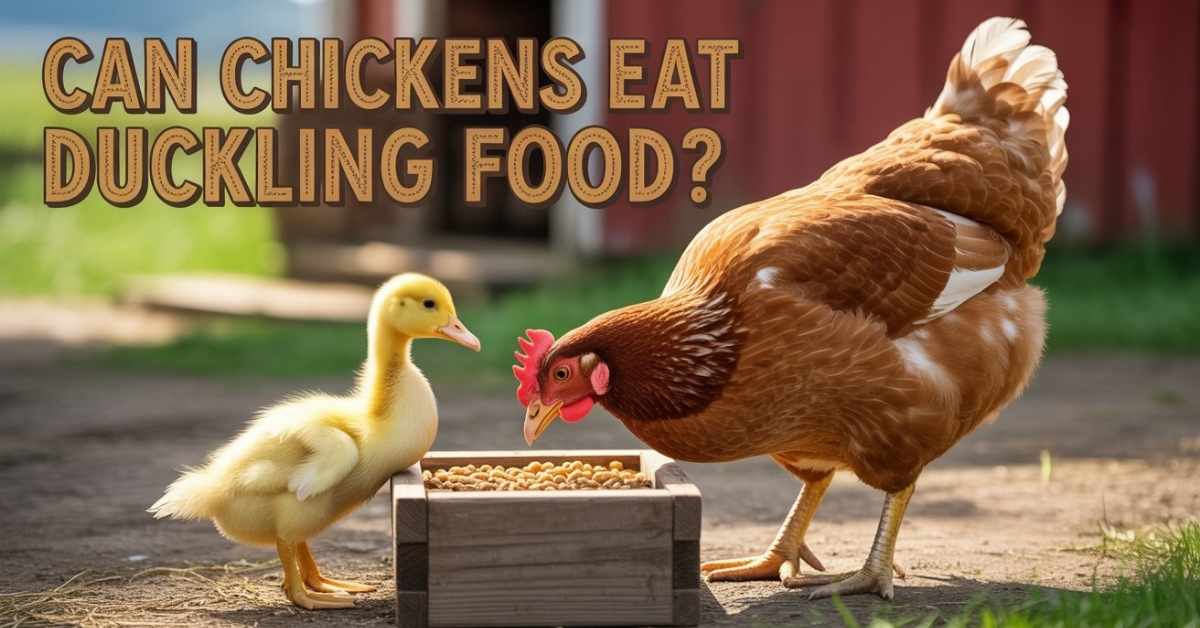
Can chickens eat duckling food? Yes, chickens can usually eat duckling food temporarily without major problems, but duckling feed is formulated differently from chicken feed and may not provide ideal long-term nutrition for chickens. Duck starter feed often contains higher protein levels, extra niacin (Vitamin B3), and different calcium balances designed specifically for waterfowl nutrition. While chickens can tolerate duck feed for short periods, long-term feeding may create nutritional imbalances, especially for laying hens and growing chicks.
Many backyard poultry owners raise ducks and chickens together, making mixed flock feeding a common challenge. Questions like can chickens eat duck feed, can ducks and chickens share feed, and can chicks eat duck starter feed are increasingly common among backyard flock keepers. Understanding the differences between duckling food and chicken feed is essential for maintaining healthy growth, proper egg production, and balanced poultry nutrition.
Quick Answer: Is Duckling Food Safe for Chickens?
| Question | Answer |
|---|---|
| Can chickens eat duckling food? | Yes, temporarily |
| Is duck feed toxic to chickens? | No |
| Can chickens survive on duck feed? | Short term, yes |
| Main nutritional difference | Niacin and protein |
| Can laying hens eat duck feed? | Occasionally |
| Can chicks eat duck starter feed? | Temporarily |
| Best long-term option | Species-appropriate feed |
What Is Duckling Food?
Duckling food is a specially formulated poultry feed designed for:
- ducklings,
- waterfowl growth,
- skeletal development,
- feather growth,
- and healthy metabolism.
Duck starter feed usually comes as:
- feed crumbles,
- pellets,
- or mash feed.
Duckling Feed Nutrition Table
| Nutrient | Purpose |
|---|---|
| 20% protein feed | Healthy duckling growth |
| Niacin (Vitamin B3) | Leg and bone development |
| Amino acids | Muscle development |
| Calcium | Skeletal support |
| Phosphorus | Bone strength |
| Balanced vitamins | Healthy growth |
Ducklings require different nutritional formulations than chicks because waterfowl grow differently and have unique dietary needs.
Can Chickens Eat Duckling Food Safely?
Yes, chickens can generally eat duckling food safely for short periods.
Why Chickens Sometimes Eat Duck Feed
In many mixed flocks:
- ducks and chickens share feeders,
- poultry roam together,
- and feed access overlaps naturally.
Free-range poultry often consume whatever feed is available nearby.
Is Duckling Feed Toxic to Chickens?
Duckling food is usually not toxic to chickens. The biggest issue is not poisoning but nutritional imbalance over time.
“Duck feed and chicken feed are both poultry feeds, but they are formulated for different species and growth needs.”
Temporary feed sharing is usually acceptable, but species-specific diets remain healthier long term.
Duck Feed vs Chicken Feed
This is the most important section for understanding mixed flock nutrition.
Main Differences Between Duck Feed and Chicken Feed
Duck starter feed and chick starter feed differ in:
- protein levels,
- niacin,
- calcium,
- medication,
- and feed formulation.
Duck Feed vs Chicken Feed Comparison Table
| Feature | Duckling Feed | Chicken Feed |
|---|---|---|
| Protein | Higher | Moderate |
| Niacin | Higher | Lower |
| Calcium | Lower for layers | Higher in layer feed |
| Medication | Usually non-medicated | Sometimes medicated |
| Waterfowl nutrition | Designed for ducks | Designed for chickens |
These differences explain why ducks and chickens do not always thrive on identical diets.
Why Ducklings Need More Niacin
One of the biggest nutritional differences involves niacin, also known as Vitamin B3.
What Is Niacin?
Niacin supports:
- healthy growth,
- skeletal development,
- leg strength,
- and nervous system function.
Why Waterfowl Need Extra Niacin
Ducklings grow faster than chicks and require more niacin to support:
- leg development,
- bone formation,
- and feather growth.
Without enough niacin, ducklings may develop:
- weak legs,
- mobility problems,
- foot problems,
- and growth abnormalities.
Niacin Deficiency Symptoms in Ducklings
| Symptom | Cause |
|---|---|
| Leg weakness | Niacin deficiency |
| Angel wing | Nutritional imbalance |
| Poor growth | Inadequate nutrition |
| Skeletal issues | Vitamin imbalance |
Can Chickens Handle Extra Niacin?
Yes, chickens usually tolerate higher niacin levels without problems. Extra niacin is generally safer than deficiency.
Can Chicks Eat Duck Starter Feed?
Baby chicks can temporarily eat duck starter feed if necessary.
Is Duck Starter Safe for Baby Chicks?
In short-term situations, duck starter feed usually provides:
- sufficient protein,
- amino acids,
- and healthy growth support.
However, it may not provide the ideal nutritional balance designed specifically for chicks.
Temporary Feeding vs Long-Term Feeding
Temporary feeding is usually acceptable during:
- emergencies,
- feed shortages,
- or mixed brooder situations.
Long-term feeding may create:
- calcium imbalance,
- growth inconsistencies,
- or nutritional deficiencies.
Can Adult Chickens Eat Duckling Food?
Adult chickens can consume duck feed occasionally, but their nutritional requirements differ significantly.
Can Laying Hens Eat Duck Feed?
Laying hens require:
- higher calcium,
- balanced layer feed,
- and egg-production support.
Duck starter feed usually lacks sufficient calcium for strong eggshell production.
Calcium Deficiency Risks for Layers
Long-term calcium deficiency may cause:
- weak eggshells,
- reduced egg production,
- bone weakness,
- and poor flock health.
Can Meat Birds Eat Duck Feed?
Broiler chickens and meat birds may tolerate higher-protein duck feed more easily because protein supports muscle growth.
Still, species-appropriate poultry nutrition remains ideal.
Risks of Feeding Duckling Food to Chickens
While duck feed is generally safe temporarily, several risks exist with long-term feeding.
Excess Protein Intake
Duck starter feed often contains:
- 20% protein feed,
- or higher-protein formulations.
Too much protein may contribute to:
- accelerated growth,
- nutritional imbalance,
- and unnecessary feed costs.
Calcium Imbalance
Layer chickens need additional calcium compared to ducklings.
Insufficient calcium may affect:
- eggshell quality,
- skeletal health,
- and laying performance.
Long-Term Nutritional Deficiencies
Improper feed formulation over time may contribute to:
- feather problems,
- poor growth,
- reduced egg quality,
- and weak flock health.
Medicated vs Non-Medicated Feed
This is one of the most misunderstood mixed-flock feeding topics.
What Is Medicated Chick Starter?
Medicated chick starter often contains:
- amprolium,
- a medication used to help control coccidiosis.
Why Ducklings Usually Need Non-Medicated Feed
Ducklings are often more sensitive to medicated feeds than chicks.
Many duck owners prefer:
- non-medicated feed,
- natural supplementation,
- and clean water management.
Can Chickens Eat Non-Medicated Duck Feed?
Yes, chickens can generally eat non-medicated duck feed safely.
Medicated vs Non-Medicated Comparison Table
| Feed Type | Best For |
|---|---|
| Medicated chick starter | Chicks |
| Non-medicated duck feed | Ducklings |
| Mixed flock feed | Shared poultry setups |
Can Ducks and Chickens Share Feed?
Yes, mixed flocks often share feed successfully with proper management.
Is Shared Feeding Safe?
Shared feeding is generally safe if:
- nutritional needs are monitored,
- feed access is controlled,
- and flock health remains stable.
Mixed Flock Feeding Challenges
Common problems include:
- feeder competition,
- nutritional imbalance,
- water messes,
- and species-specific requirements.
Shared Feeders and Feeder Competition
Ducks often:
- spill water into feeders,
- dominate feeding areas,
- or create messy feeding conditions.
Proper feeder space helps reduce stress.
Best Feed for Mixed Flocks
Mixed flock management works best with balanced strategies.
Separate Feeders vs Shared Feeders
Many flock owners use:
- separate layer feeders,
- duck supplementation,
- or free-choice feeding systems.
Feeding Ducks and Chickens Together Safely
Healthy mixed flock management often includes:
- species-appropriate feed,
- niacin supplementation for ducks,
- clean water access,
- and monitored feeding behavior.
“The healthiest mixed flocks usually balance convenience with species-specific nutrition.”
How Long Can Chickens Eat Duckling Food?
Temporary feeding is usually safe for several days or short-term situations.
When to Switch Back to Chicken Feed
Chickens should return to proper chicken feed when possible, especially:
- laying hens,
- growing chicks,
- and production flocks.
Signs of Nutritional Imbalance
Watch for:
- poor eggshell quality,
- feather issues,
- weight imbalance,
- and reduced growth.
Can Chickens Eat Duck and Goose Feed?
Waterfowl feed for ducks and geese is usually similar.
Goose Feed vs Duck Feed
Both often contain:
- extra niacin,
- higher protein,
- and waterfowl-focused nutrition.
Shared Poultry Feed Concerns
Long-term shared feeding may still create:
- calcium imbalance,
- excess protein intake,
- and incomplete nutrition for layers.
Poultry Nutrition Basics for Chickens and Ducks
Balanced poultry nutrition changes based on:
- species,
- age,
- production stage,
- and growth goals.
Protein Requirements by Age
| Poultry Type | Typical Protein Needs |
|---|---|
| Ducklings | 20% protein feed |
| Chicks | 18% protein feed |
| Layers | Lower protein layer feed |
Calcium Needs for Layers
Laying hens require:
- strong calcium supplementation,
- balanced minerals,
- and proper amino acid intake.
Feed Transition Stages
Healthy poultry feeding includes:
- starter feed,
- grower feed,
- and layer feed transitions.
Can Baby Chicks and Ducklings Eat the Same Feed?
This is common in mixed brooders.
Shared Starter Feed Challenges
Chicks and ducklings grow differently, making shared feed complicated.
Best Starter Feed Options
Many flock owners choose:
- non-medicated starter feed,
- additional niacin supplementation,
- and monitored feeding systems.
LEARN MORE: Can Chickens Eat Cranberry Sauce?
Healthier Feeding Practices for Backyard Poultry
Proper flock management improves long-term poultry health.
Balanced Poultry Nutrition
Healthy flocks need:
- balanced vitamins,
- amino acids,
- calcium,
- phosphorus,
- and clean water.
Proper Feed Storage
Fresh feed reduces:
- spoilage,
- contamination,
- and nutritional degradation.
Preventing Nutritional Deficiencies
Healthy poultry management includes:
- feed monitoring,
- species-appropriate diets,
- and nutritional adjustments when necessary.
Common Mistakes When Feeding Duckling Food to Chickens
Many backyard flock owners accidentally create nutritional problems.
Feeding High-Protein Feed Too Long
Excess protein may become wasteful and unbalanced over time.
Ignoring Layer Calcium Needs
Layer hens require significantly more calcium than ducklings.
Using the Wrong Feed Stage
Starter feed, grower feed, and layer feed each serve different purposes.
Sharing Feed Without Monitoring Intake
Mixed flocks require observation and adjustment.
Expert Tips for Mixed Flock Feeding
Experienced poultry keepers often follow practical feeding systems.
Best Practices
- Use species-appropriate feed whenever possible.
- Monitor flock health carefully.
- Supplement ducks with niacin if needed.
- Reduce feeder competition.
- Maintain clean water access.
Small management changes often improve flock health dramatically.
Frequently Asked Questions
Can chickens eat duck starter feed safely?
Yes, chickens can usually eat duck starter feed temporarily without major issues.
Can laying hens eat duckling feed?
Occasionally, yes, but duck feed lacks the calcium levels layers need long term.
Why do ducklings need more niacin?
Ducklings grow rapidly and require extra niacin for healthy leg and skeletal development.
Is duck feed healthier than chicken feed?
Not necessarily. Each feed is formulated for different poultry species.
Can ducks survive on chicken feed?
Short term, sometimes, but ducklings often need additional niacin supplementation.
Can chickens and ducks share feeders?
Yes, but feeder competition and nutritional differences require careful management.
Final Verdict on Feeding Duckling Food to Chickens
So, can chickens eat duckling food? Yes, chickens can usually eat duckling food temporarily without serious problems, but duck starter feed is formulated specifically for waterfowl and may not provide ideal long-term nutrition for chickens. Differences in niacin, protein levels, calcium balance, and medicated vs non-medicated feed make species-specific poultry diets healthier over time.
Mixed flocks can successfully share feed temporarily with proper flock management, clean water access, and nutritional monitoring. However, laying hens, growing chicks, and production flocks benefit most from balanced chicken feed designed for their specific growth and egg-laying needs.