
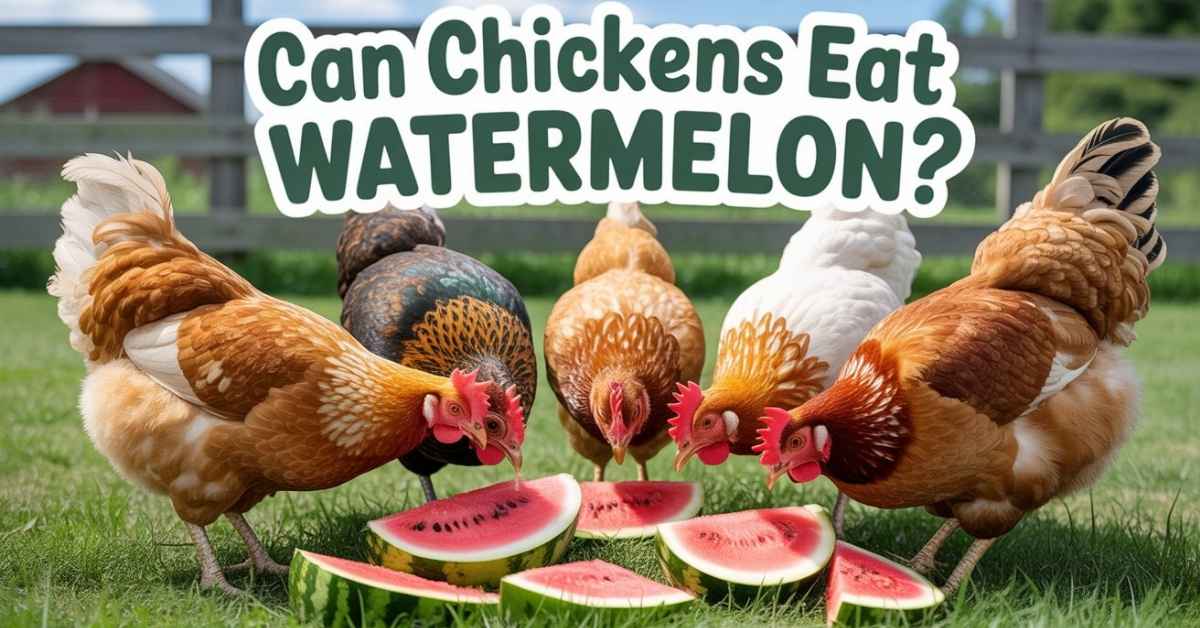
Can chickens eat watermelon? Yes, chickens can eat watermelon safely in moderation. Watermelon is a hydrating, low-calorie fruit packed with vitamin A, vitamin C, potassium, antioxidants, and natural electrolytes that support flock health during hot weather. Chickens can eat watermelon flesh, watermelon rind, watermelon seeds, and even small amounts of watermelon skin when served properly. This juicy fruit also works as an excellent summer enrichment treat for backyard chickens and laying hens.
Many chicken keepers use watermelon as a cooling snack during summer because its high water content helps prevent dehydration and heat stress. However, like all treats, watermelon should only make up a small portion of a balanced poultry diet.
In this complete guide, you’ll learn:
- whether chickens can eat watermelon safely
- if watermelon rind and seeds are safe
- what age chickens can eat watermelon
- how much watermelon chickens should eat
- whether chickens can eat watermelon plants and leaves
- the benefits and risks of feeding watermelon
- the best ways to serve watermelon to backyard flocks
Can Chickens Eat Watermelon?
Is Watermelon Safe for Chickens?
Yes, watermelon is considered one of the safest and healthiest fruits for backyard chickens. Chickens naturally enjoy sweet, water-rich fruits, and watermelon provides:
- hydration support
- natural electrolytes
- cooling benefits
- vitamins and antioxidants
- flock enrichment
Both adult chickens and laying hens can safely eat:
- watermelon flesh
- watermelon rind
- watermelon seeds
- watermelon skin in moderation
Seedless watermelon is often easiest to serve, but seeded watermelon is also generally safe for chickens.
“Watermelon is one of the best hydrating summer treats for backyard chickens.”
Why Chickens Love Watermelon
Chickens are naturally attracted to juicy fruits because they:
- provide moisture
- taste sweet
- encourage pecking behavior
- offer cooling relief during summer heat
Many flock owners notice chickens become especially excited when offered chilled or frozen watermelon treats during hot weather.
Watermelon also acts as a natural boredom buster for backyard flocks.
Is Watermelon Healthy for Backyard Chickens?
Yes. Watermelon contains:
- vitamin A
- vitamin B6
- vitamin C
- potassium
- magnesium
- antioxidants
These nutrients support:
- immune system health
- hydration
- healthy digestion
- electrolyte balance
- healthy laying hens
Watermelon is also a low-calorie fruit treat, making it healthier than many processed snacks.
Nutritional Benefits of Watermelon for Chickens
Vitamins and Minerals in Watermelon
Watermelon is more nutritious than many people realize.
| Nutrient | Benefits for Chickens |
|---|---|
| Vitamin A | Supports vision and immunity |
| Vitamin C | Helps immune health |
| Vitamin B6 | Supports metabolism |
| Potassium | Electrolyte balance |
| Magnesium | Muscle and nerve support |
| Antioxidants | Cellular protection |
| Water Content | Hydration support |
Because watermelon contains over 90% water, it becomes especially useful during summer.
Hydration Benefits During Summer
One of watermelon’s biggest advantages is hydration.
Backyard chickens can suffer from:
- heat stress
- dehydration
- reduced appetite
- lower egg production during extreme heat
Watermelon helps because it provides:
- natural water intake
- electrolyte support
- cooling hydration
- refreshing summer nutrition
Hydrating foods for chickens become extremely important during heat waves.
How Watermelon Supports Flock Health
When fed correctly, watermelon may help support:
- healthy digestion
- flock hydration
- summer poultry care
- immune support
- laying hen wellness
Natural fruit treats also encourage flock enrichment and pecking behavior.
Can Chickens Eat Different Parts of Watermelon?
Can Chickens Eat Watermelon Flesh?
Yes. The flesh is the soft red or pink inside part of the watermelon and is the safest portion for chickens.
Watermelon flesh:
- contains high water content
- is easy to digest
- provides vitamins and antioxidants
- supports hydration
Fresh watermelon chunks are ideal for backyard chickens.
Can Chickens Eat Watermelon Seeds?
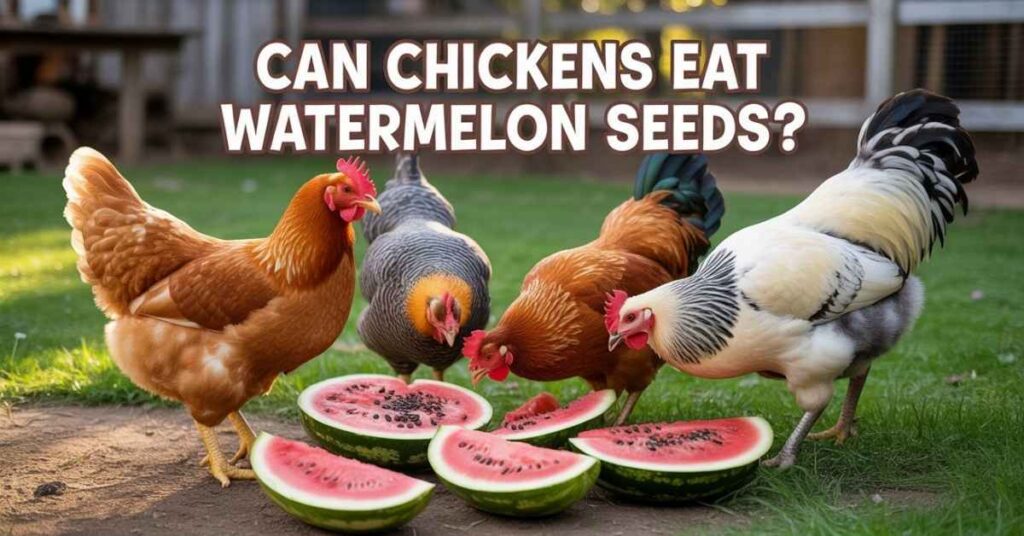
Can chickens eat watermelon seeds? Yes, chickens can eat watermelon seeds safely.
Chickens naturally consume seeds while foraging outdoors, and watermelon seeds usually pass through the digestive system without problems.
Both:
- black watermelon seeds
- white immature seeds
are generally safe in moderation.
Can Chickens Eat Watermelon With Seeds?
Yes. Can chickens eat watermelon with seeds? Absolutely.
Most backyard chickens have no trouble eating seeded watermelon. However:
- very young chicks should avoid large seeds
- moderation is still important
- oversized hard seeds should not dominate the diet
Seedless watermelon remains easier for smaller chickens.
Can Chickens Eat Watermelon Rind?
Can chickens eat watermelon rind? Yes, watermelon rind is safe for chickens.
The rind contains:
- fiber
- moisture
- nutrients
- chewing enrichment
Many chickens enjoy pecking at watermelon rinds long after the soft flesh is gone.
Can Chickens Eat Watermelon Rinds?
Yes. Can chickens eat watermelon rinds? Chicken’s can safely eat chopped or softened watermelon rinds in moderation.
Large rinds work especially well as:
- flock enrichment treats
- hanging snacks
- boredom relievers
Some flock owners freeze rinds during summer for additional cooling benefits.
Can Chickens Eat Watermelon Skin?
Can chickens eat watermelon skin? Yes, but moderation and cleanliness matter.
The outer green skin is tougher than the inner rind and may be harder to digest. Always:
- wash watermelon thoroughly
- avoid pesticide-treated fruit
- remove moldy sections
Small amounts of watermelon skin are usually safe for healthy adult chickens.
Can Chickens Eat Watermelon Leaves?
Can chicken’s eat watermelon leaves? Watermelon leaves are generally considered non-toxic for chicken’s.
However:
- leaves should be pesticide-free
- avoid chemically treated garden plants
- moderation still matters
Backyard chickens often nibble on watermelon vines and leaves naturally while foraging.
Can Chickens Eat Watermelon Plants?
Can chickens eat watermelon plants? Yes, chicken’s may safely peck at watermelon plants, vines, and leftover garden scraps in moderation.
This can:
- reduce garden waste
- provide natural enrichment
- encourage foraging behavior
Still, avoid:
- pesticide exposure
- moldy plant material
- chemically treated vines
LEARN MORE: Can Chickens Eat Avocado?
Can Baby Chicks Eat Watermelon?
What Age Can Chickens Eat Watermelon?
Many flock owners ask: what age can chicken’s eat watermelon?
Baby chicks can usually try tiny amounts of watermelon after:
- several weeks of age
- transitioning beyond starter feed
- developing stronger digestion
Very young chicks should focus mainly on balanced chick starter feed.
Why Moderation Matters for Chicks
Chicks have:
- delicate digestive systems
- smaller stomachs
- lower tolerance for sugary treats
Too much watermelon may cause:
- diarrhea
- digestive imbalance
- reduced nutrient intake
Moderation is extremely important.
Safe Portion Sizes for Young Chickens
For chicks:
- offer tiny soft pieces
- avoid large seeds
- feed occasionally only
- provide grit if necessary
Fresh clean water should always remain available.
Can Chickens Eat Frozen Watermelon?
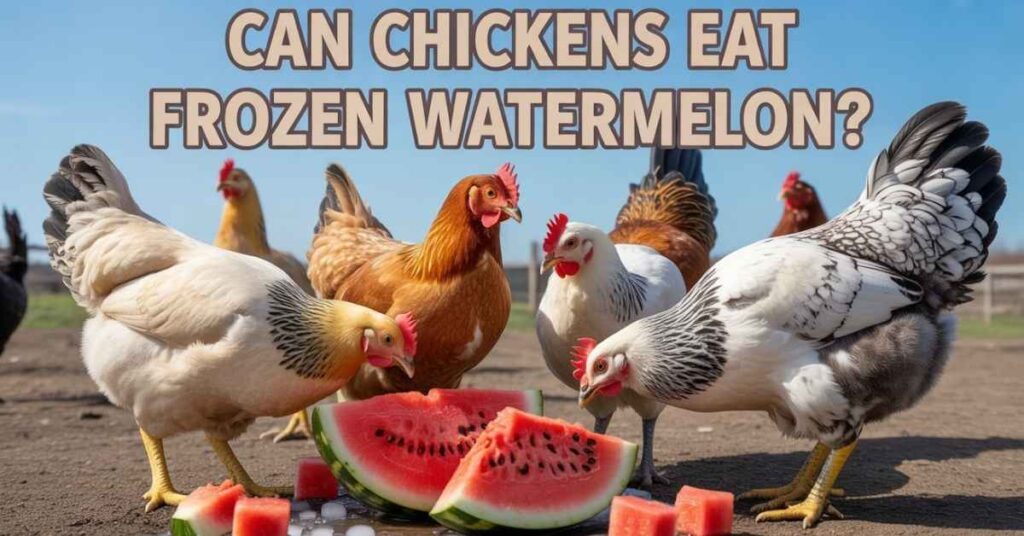
Frozen Watermelon as a Summer Treat
The Frozen watermelon is one of the best cooling treats for chickens during extreme heat.
Frozen watermelon provides:
- hydration
- enrichment
- heat stress relief
- natural cooling
Backyard flocks often enjoy pecking frozen watermelon chunks during summer afternoons.
Best Frozen Watermelon Treat Ideas
Popular ideas include:
- frozen watermelon cubes
- hanging frozen watermelon halves
- watermelon ice bowls
- chilled watermelon slices
These treats help reduce heat-related poultry stress.
Can Frozen Watermelon Help Prevent Heat Stress?
Yes. Hydrating treats support:
- natural cooling
- electrolyte balance
- water intake
- heat exhaustion prevention
Frozen fruit enrichment is especially useful for:
- laying hens
- larger backyard flocks
- chickens during heat waves
How Much Watermelon Can Chickens Eat?
Recommended Feeding Frequency
Watermelon should remain a treat, not a primary food source.
| Chicken Type | Recommended Amount |
|---|---|
| Adult Chickens | 1–2 times weekly |
| Laying Hens | Moderate summer treats |
| Baby Chicks | Tiny occasional amounts |
A healthy diet should contain:
- 90% complete poultry feed
- less than 10% treats
Why Too Much Watermelon Can Be Harmful
Overfeeding watermelon may lead to:
- digestive upset
- diarrhea
- excessive sugar intake
- reduced balanced nutrition
Even healthy fruits should be fed in moderation.
Balanced Diet Guidelines
Watermelon should supplement—not replace—a balanced poultry diet.
Quality feed remains essential for:
- protein
- calcium
- egg production
- long-term flock health
Best Ways To Feed Watermelon to Chickens
Fresh Watermelon Chunks
Fresh chunks are simple and hydrating.
Cut watermelon into:
- bite-sized cubes
- slices
- halves for pecking enrichment
Hanging Watermelon Enrichment
Hanging watermelon:
- encourages natural pecking
- keeps chickens active
- reduces boredom
- improves flock enrichment
This works especially well in confined runs.
Frozen Watermelon Treats
Frozen watermelon becomes an excellent:
- summer snack
- cooling treat
- hydration source
Many poultry keepers freeze watermelon chunks overnight before serving.
Watermelon Bowl for Backyard Flocks
Large watermelon bowls allow multiple chicken’s to eat together while encouraging natural flock interaction.
Watermelon and Mint Summer Snacks
Some flock owners combine watermelon with:
- mint
- cucumbers
- lettuce
This creates refreshing summer poultry treats.
LEARN MORE: Can Chickens Eat Pineapple?
Watermelon for Summer Chicken Care
Best Cooling Foods for Chickens
| Food | Hydration Benefit | Safe for Chickens? |
|---|---|---|
| Watermelon | Excellent | Yes |
| Cucumbers | Excellent | Yes |
| Lettuce | Good | Yes |
| Frozen Berries | Moderate | Yes |
| Zucchini | Good | Yes |
Hydration Support During Heat Waves
During summer heat waves, chickens require:
- extra hydration
- shade
- airflow
- cooling foods
Hydrating fruits help maintain healthy flock hydration.
Preventing Heat Stress in Backyard Flocks
Heat stress prevention strategies include:
- frozen treats
- cool water
- shaded coops
- proper ventilation
- hydrating snacks
Watermelon works extremely well as part of summer flock management.
Risks of Feeding Too Much Watermelon
Sugar Content Concerns
Watermelon contains natural sugars. Excessive fruit feeding may:
- disrupt digestion
- reduce appetite for balanced feed
- contribute to unhealthy treat dependency
Digestive Upset and Diarrhea
Too much watermelon may cause loose droppings because of:
- high water content
- sugar levels
- overfeeding
Moderation prevents most digestive issues.
Moldy Watermelon Dangers
Never feed moldy watermelon to chickens.
Moldy fruit may contain dangerous toxins and bacteria that harm poultry health.
Always remove spoiled fruit immediately.
Choking Risks From Large Rinds
Large hard rind pieces may become difficult for smaller birds to manage.
Chopping rinds into smaller sections helps improve safety.
Can Watermelon Improve Egg Production?
Hydration and Egg-Laying Health
Hydrated hens tend to maintain healthier laying patterns during summer.
Watermelon helps support:
- water intake
- cooling
- electrolyte balance
Healthy Treats for Laying Hens
Healthy laying hens benefit from:
- balanced nutrition
- hydration-rich foods
- natural treats in moderation
Watermelon fits well into a summer poultry care plan.
Summer Nutrition for Egg Production
Extreme heat can reduce egg production. Cooling treats help chickens stay comfortable and active during summer.
Safe Fruits Chickens Can Eat
Best Fruits for Backyard Chickens
Healthy fruits include:
- watermelon
- strawberries
- blueberries
- bananas
- grapes
- apples
These fruits provide hydration and nutrients.
Fruits Chickens Should Avoid
Safe vs Unsafe Fruits Table
| Fruit | Safe? | Notes |
|---|---|---|
| Watermelon | Yes | Excellent hydrating treat |
| Bananas | Yes | Safe in moderation |
| Strawberries | Yes | Vitamin-rich |
| Avocado | No | Toxic to chickens |
| Moldy Fruit | No | Dangerous bacteria |
Low-Calorie Fruits for Chickens
Watermelon remains one of the best low-calorie fruit treats because of its high water content and hydration benefits.
Expert Tips for Feeding Watermelon to Chickens
Rotating Fruits for Better Nutrition
Fruit rotation helps provide:
- nutritional variety
- balanced treats
- enrichment opportunities
Keeping Treats in Moderation
Remember:
- less than 10% treats
- balanced poultry nutrition matters most
Watching for Digestive Problems
Monitor chickens for:
- diarrhea
- bloating
- unusual droppings
- reduced appetite
Providing Fresh Water Alongside Fruit
Fresh water remains essential even when feeding hydrating fruits.
Frequently Asked Questions
Can chicken’s eat watermelon?
Yes. Watermelon is safe for chickens in moderation.
Can chickens eat watermelon rind?
Yes. Watermelon rind is safe and provides chewing enrichment.
Can chickens eat watermelon rinds?
Yes. Chopped watermelon rinds are healthy treats for backyard chickens.
Can chickens eat watermelon seeds?
Yes. Watermelon seeds are generally safe for chickens.
Can chickens eat watermelon with seeds?
Yes. Most chicken’s safely eat seeded watermelon.
Can chickens eat watermelon skin?
Yes, but wash fruit carefully and avoid pesticides.
Can chickens eat watermelon leaves?
Yes. Watermelon leaves are generally non-toxic in moderation.
Can chickens eat watermelon plants?
Yes. Chickens may peck at watermelon plants and vines safely.
What age can chickens eat watermelon?
Chicks can try tiny amounts after several weeks of age.
Can chicken’s eat frozen watermelon?
Yes. Frozen watermelon is an excellent summer cooling treat.
Final Thoughts on Feeding Watermelon to Chickens
Watermelon is one of the best healthy summer treats for backyard chickens. Its:
- high water content
- electrolyte support
- vitamin-rich nutrition
- cooling benefits
make it an excellent option during hot weather.
Chickens can safely enjoy:
- watermelon flesh
- watermelon rind
- watermelon seeds
- watermelon skin
- watermelon plants
- watermelon leaves
when served properly and in moderation.
The key is balance. Watermelon should remain a refreshing supplement alongside:
- complete poultry feed
- fresh water
- balanced nutrition
For backyard flock owners looking for safe hydrating foods for chickens, watermelon remains one of the smartest and healthiest summer treats available.