
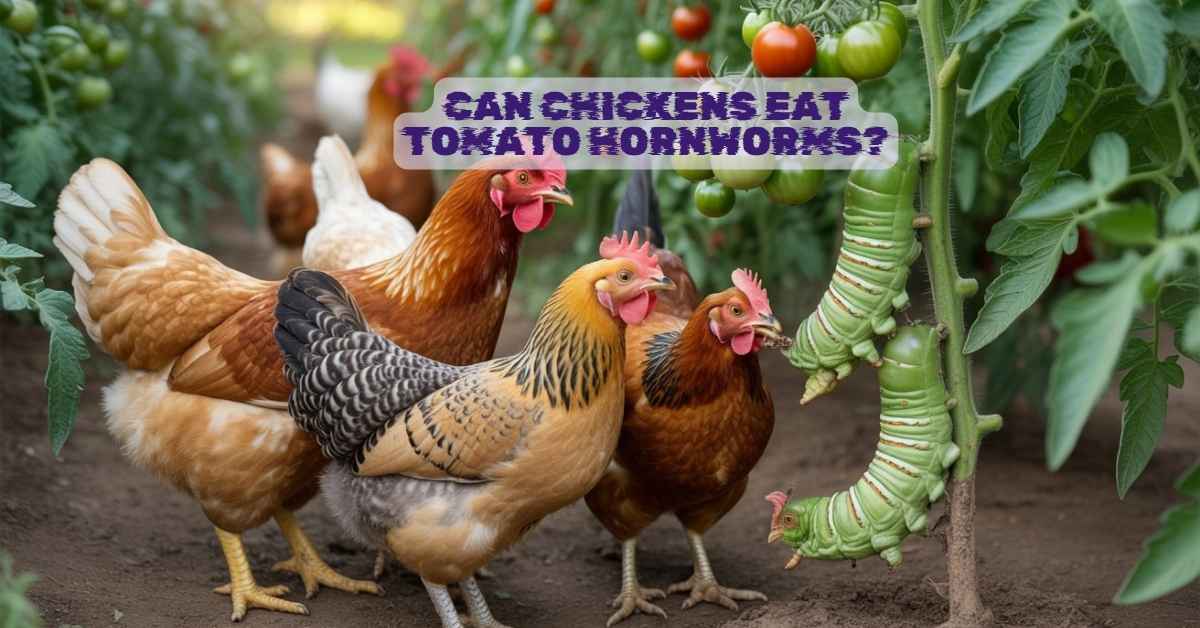
Can chickens eat tomato hornworms? Yes—chickens can eat tomato hornworms, and they often love them as a natural, protein-rich treat. However, the safety depends on where the hornworms come from and what they have eaten.
If the worms have fed heavily on tomato plants or been exposed to pesticides, they may carry solanine or chemical residues, which can harm your flock.
So the real answer is: yes, but only when sourced and fed correctly.
This complete guide explains everything you need to know, including toxicity risks, feeding limits, nutritional value, and safe practices, so you can confidently decide whether to feed hornworms to your chickens.
What Are Tomato Hornworms?
Tomato hornworms are large green caterpillars, scientifically known as Manduca quinquemaculata. They are commonly found feeding on plants from the nightshade family, especially tomato plants.
Key Characteristics
- Bright green color
- Large size (up to 10 cm / 3.9 inches)
- Soft-bodied insect
- Found in gardens and farms
These caterpillars are part of a chicken’s natural insect diet, making them attractive to backyard flocks.
Why Chickens Love Hornworms
Chickens are natural foragers and instinctively eat insects.
Behavioral Reasons
- Soft texture makes them easy to eat
- High moisture content makes them refreshing
- Movement triggers pecking instinct
“Chickens treat hornworms like a high-value snack, similar to how they react to mealworms.”
👉 This makes hornworms an excellent enrichment food, encouraging natural behavior.
Are Tomato Hornworms Safe for Chickens?
Tomato hornworms can be safe, but only under certain conditions.
When They Are Safe
- Raised without pesticides
- Limited exposure to tomato leaves
- Clean, controlled feeding environment
When They Are Unsafe
- Collected from chemically treated gardens
- Heavily fed on tomato foliage
- Unknown or contaminated source
👉 Safety depends more on the worm’s diet and environment than the worm itself.
Are Tomato Hornworms Poisonous? (Critical Insight)
Tomato hornworms are not inherently poisonous, but they can become risky because of what they eat.
The Solanine Factor
Tomato plants belong to the nightshade family and contain solanine, a natural toxin found in:
- Tomato leaves
- Stems
- Unripe fruit
Hornworms feed on these plants and may accumulate small amounts of solanine.
👉 This is why many people ask: are tomato hornworms poisonous to chickens?
The Truth
- Small exposure → usually safe
- High exposure → potential risk
👉 The key issue is dose and frequency.
How Solanine Affects Chickens
Solanine can affect chickens if consumed in significant amounts.
Possible Symptoms
- Lethargy
- Diarrhea
- Digestive upset
- Reduced appetite
In rare cases, severe exposure may lead to neurological issues.
👉 However, this typically happens only when chickens consume large quantities of contaminated worms.
Nutritional Benefits of Tomato Hornworms
Hornworms are not just edible—they are nutrient-rich.
Nutritional Breakdown
| Nutrient | Value |
|---|---|
| Protein | ~9–15% |
| Moisture | ~80–85% |
| Fat | ~2–4% |
| Calcium | Trace |
| Phosphorus | Moderate |
Benefits Explained
- Protein supports muscle growth and egg production
- Moisture helps hydration, especially in hot weather
- Low fat makes them a clean energy source
👉 This makes hornworms a valuable occasional protein supplement.
How to Feed Hornworms to Chickens Safely
Feeding method plays a major role in safety.
Preparation
- Rinse hornworms thoroughly
- Ensure they are pesticide-free
- Avoid worms from treated gardens
Feeding Approach
- Offer whole or chopped
- Observe how chickens react
- Remove leftovers
👉 Proper preparation reduces toxicity and contamination risks.
How Many Hornworms Can Chickens Eat?
Moderation is essential when feeding insects.
Feeding Guidelines
| Factor | Recommendation |
|---|---|
| Portion size | 1–3 hornworms per chicken |
| Frequency | 1–2 times per week |
| Diet ratio | 10% treats / 90% poultry feed |
Why Limits Matter
Hornworms are high in protein and moisture, and too many can:
- Disrupt dietary balance
- Cause digestive issues
- Reduce regular feed intake
👉 Always treat hornworms as a supplement, not a staple.
Wild vs Store-Bought Hornworms
The source of hornworms directly impacts safety.
Comparison Table
| Type | Safety | Risk Level | Recommendation |
|---|---|---|---|
| Wild hornworms | ⚠️ Variable | Medium–High | Avoid if unsure |
| Garden hornworms | ⚠️ Moderate | Medium | Check for chemicals |
| Store-bought hornworms | ✅ High | Low | Best option |
👉 Store-bought hornworms are the safest choice because they are raised in controlled environments.
Risks of Feeding Tomato Hornworms
Even safe foods can cause problems if misused.
Main Risks
- Solanine toxicity from plant exposure
- Pesticide contamination
- Protein overload
- Digestive imbalance
👉 Most risks come from source quality and overfeeding, not the worms themselves.
Can Chickens Digest Hornworms?
Yes—hornworms are actually easy to digest.
Digestibility Factors
- Soft body
- High moisture content
- Easily processed by the gizzard
👉 Compared to tougher insects, hornworms are highly digestible.
Can Baby Chicks Eat Hornworms?
Hornworms are not suitable for young chicks.
Reasons
- Large size creates choking risk
- Immature digestive system
- Requires protein-balanced starter feed
👉 Avoid feeding hornworms to chicks under 6–8 weeks old.
Common Mistakes When Feeding Hornworms
Many problems arise from simple mistakes.
Frequent Errors
- Feeding worms from pesticide-treated plants
- Giving too many worms at once
- Ignoring worm size
- Not verifying the source
👉 Avoiding these mistakes ensures safe feeding practices.
Best Protein Treats for Chickens
Hornworms are not the only protein option.
Alternatives
- Mealworms
- Black soldier fly larvae
- Crickets
These are often:
- Safer
- Easier to source
- More consistent in nutrition
Seasonal Feeding Considerations
Summer Feeding
- Hornworms provide hydration
- Help chickens stay cool
Winter Feeding
- Use sparingly
- Focus on energy-rich feed
👉 Seasonal feeding improves overall flock health.
Expert Tips for Safe Insect Feeding
A balanced approach always works best.
- Verify the source of insects
- Rotate protein treats
- Maintain a balanced diet
Expert Insight
“Insects are a natural part of a chicken’s diet, but consistency and moderation are key.”
How to Identify Safe Hornworms
Knowing what to look for helps reduce risk.
Indicators of Safe Worms
- Bright green color
- No chemical smell
- Known pesticide-free source
👉 Avoid worms from unknown or contaminated environments.
Signs of Toxic Exposure in Chickens
Recognizing early symptoms can prevent serious issues.
Warning Signs
- Weakness
- Loss of appetite
- Digestive problems
👉 If symptoms appear, stop feeding immediately and monitor your flock.
LEARN MORE: Can Chickens Eat a Turkey Carcass?
Are Hornworms Better Than Other Insects?
Hornworms have advantages but also limitations.
Comparison Overview
| Insect | Protein | Safety | Recommendation |
|---|---|---|---|
| Hornworms | Medium | Conditional | Occasional |
| Mealworms | High | Safe | Regular treat |
| BSFL | High | Very safe | Best option |
👉 Hornworms are good, but not the best everyday protein source.
Can Hornworms Affect Egg Production?
Yes, depending on how they are used.
Positive Effects
- Added protein supports egg production
Negative Effects
- Overfeeding can:
- disrupt nutrition
- reduce egg consistency
👉 Balance is the key to maintaining healthy egg production.
Safe Feeding Chart for Chickens
| Food Type | Safe | Risk | Notes |
|---|---|---|---|
| Hornworms | ⚠️ Conditional | Medium | Check source |
| Mealworms | ✅ | Low | Safer option |
| BSFL | ✅ | Low | Highly recommended |
FAQs About Tomato Hornworms and Chickens
Can chickens eat tomato hornworms safely?
Yes, if the worms are pesticide-free and fed in moderation.
Are tomato hornworms poisonous to chickens?
Not inherently, but they may carry toxins depending on their diet.
How many hornworms can chickens eat?
1–3 worms per chicken, 1–2 times per week.
Can chickens eat hornworms from tomato plants?
Only if you are sure the plants were not treated with chemicals.
Can chickens eat hornworms raw?
Yes, chickens naturally eat them raw.
Final Verdict
Tomato hornworms are a safe and nutritious treat for chickens—but only when used carefully.
Key Takeaways
- Safe when sourced properly
- High in protein and moisture
- Must be fed in moderation
- Risk depends on toxins and pesticides
When used correctly, hornworms provide:
- Nutritional benefits
- Natural enrichment
- Dietary variety
When misused, they can cause:
- Toxic exposure
- Digestive issues
- Nutritional imbalance
👉 The simple rule: Feed tomato hornworms occasionally, verify their source, and always prioritize a balanced diet.