
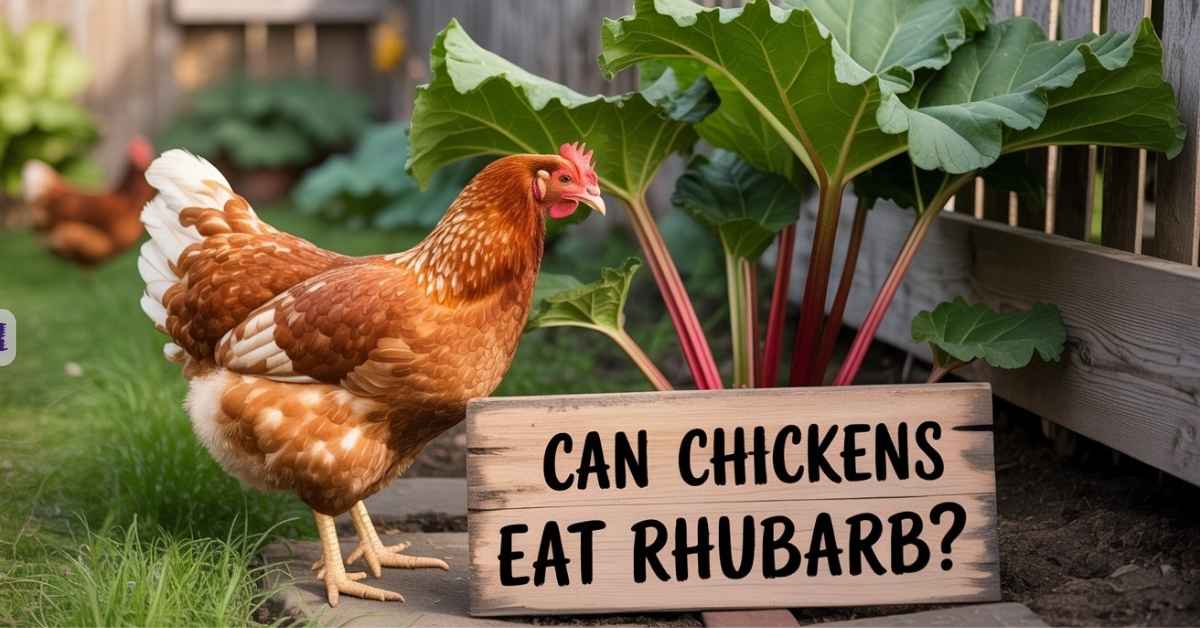
Can chickens eat rhubarb? No—chickens should not eat rhubarb leaves, and even the stalks should be treated with caution. Rhubarb contains oxalic acid (oxalates), a natural plant toxin that can bind calcium and damage organs, especially the kidneys.
While the stalks have lower toxin levels, the leaves are highly toxic and can cause serious health problems or death in chickens.
If you raise backyard chickens, understanding which parts of rhubarb are dangerous, how toxicity works, and how to protect your flock is essential for maintaining a safe and balanced poultry diet.
Why Rhubarb Is Toxic to Chickens
Rhubarb is widely known as a toxic garden plant for chickens, mainly because of its high oxalic acid content. This compound is naturally found in many plants, but in rhubarb leaves, it exists in dangerously high concentrations.
How Oxalic Acid Affects Chickens
- Binds with calcium in the body
- Reduces calcium absorption
- Leads to kidney damage and renal failure
- Disrupts normal digestion
Scientific estimates show:
- Rhubarb leaves contain about ~0.5% oxalic acid
- Toxic exposure can occur around ~375 mg/kg body weight
“Oxalic acid doesn’t just irritate—it interferes with essential body functions, making it dangerous even in moderate amounts.”
👉 This is why rhubarb is listed among toxic plants for chickens.
What Is Oxalic Acid? (Simple Explanation)
Oxalic acid is a plant defense compound. It protects plants from pests but becomes harmful when consumed by animals.
In Chickens, It Can:
- Bind to calcium → causing deficiency
- Form crystals in kidneys → causing damage
- Trigger digestive and neurological symptoms
The highest concentrations are found in:
- Rhubarb leaves
- Roots
- Certain other plant parts
Can Chickens Eat Rhubarb Plants?
Many chicken keepers ask: can chickens eat rhubarb plants?
The answer is NO—rhubarb plants are not safe overall.
Plant Breakdown
| Plant Part | Safety | Risk Level | Recommendation |
|---|---|---|---|
| Leaves | ❌ Toxic | High | Never feed |
| Stems (stalks) | ⚠️ Limited | Medium | Rare use only |
| Roots | ❌ Toxic | High | Avoid |
👉 Even though some parts are less toxic, the plant as a whole is considered unsafe for chickens.
Which Parts of Rhubarb Are Toxic?
Understanding plant parts is critical for SEO and user intent.
Can Chickens Eat Rhubarb Leaves?
- can chickens eat rhubarb leaves
- can chickens eat rhubarb leaves?
- can chickens eat rhubarb leaf
- can chickens eat rhubarb leaves raw
The answer is always NO.
Rhubarb leaves contain:
- High levels of oxalic acid
- Additional plant toxins
👉 Even small amounts can lead to serious poisoning.
Can Chickens Eat Rhubarb Leaves and Stems?
Many people search:
- can chickens eat rhubarb leaves and stems
- can chickens eat rhubarb leaves an stems
Key Insight
| Part | Safety |
|---|---|
| Leaves | ❌ Toxic |
| Stems | ⚠️ Limited |
👉 Leaves must be avoided entirely, while stems are only occasionally tolerated in very small amounts.
Rhubarb Stalks (Stems)
Stalks contain much lower oxalic acid levels, but they are still not ideal.
Feeding Reality
- Not toxic like leaves
- Still not recommended as regular food
- Should only be fed rarely, if at all
Rhubarb Roots
Roots are rarely discussed, but they are:
- Toxic
- High in harmful compounds
Toxicity Breakdown Table (Quick Reference)
| Plant Part | Safety | Toxin Level | Recommendation |
|---|---|---|---|
| Leaves | ❌ | High | Never feed |
| Stems | ⚠️ | Low | Rare use |
| Roots | ❌ | Medium–High | Avoid |
What Happens If Chickens Eat Rhubarb?
When chickens consume rhubarb, especially leaves, several harmful processes begin.
Internal Effects
- Calcium gets bound and depleted
- Kidneys struggle to filter toxins
- Digestive system becomes unstable
Visible Effects
- Weakness
- Loss of appetite
- Diarrhea
- Tremors
👉 In severe cases, toxicity can lead to organ failure and death.
Symptoms of Rhubarb Poisoning in Chickens
Recognizing symptoms early can save your flock.
Warning Signs
- Lethargy
- Diarrhea
- Tremors
- Weakness
- Reduced appetite
Severe Symptoms
- Paralysis
- Kidney failure
- Death
👉 Immediate action is required if symptoms appear.
How Much Rhubarb Is Toxic?
Toxicity depends on dose and body weight.
Scientific Estimates
| Metric | Value |
|---|---|
| Oxalic acid in leaves | ~0.5% |
| Toxic dose | ~375 mg/kg body weight |
| Onset of symptoms | Within hours |
👉 Even small amounts can be dangerous, especially for smaller birds.
Can Chickens Eat Rhubarb Leaves Raw?
This is one of the most searched questions:
- can chickens eat rhubarb leaves raw
The answer is NO—raw leaves are extremely toxic.
👉 There is no safe preparation method for rhubarb leaves.
Why Chickens May Eat Rhubarb Anyway
Many assume chickens avoid toxic foods—but this is incorrect.
Behavioral Insight
- Chickens are curious eaters
- They peck based on availability, not safety
- Free-range chickens are at higher risk
👉 This is why human control is essential.
How to Protect Chickens from Rhubarb Plants
Prevention is the best strategy.
Effective Methods
- Fence off rhubarb plants
- Remove plants from coop areas
- Supervise free-range chickens
- Avoid feeding garden scraps
👉 Simple prevention can eliminate most toxicity risks.
Safe Alternatives to Rhubarb
Instead of risky foods, offer safer vegetables.
Better Options
- Lettuce
- Spinach
- Cabbage
- Pumpkin
- Carrots
These provide:
- Nutrients
- Fiber
- Low toxicity risk
Common Mistakes Chicken Owners Make
Avoid these mistakes:
- Assuming chickens avoid toxic plants
- Feeding rhubarb scraps
- Ignoring plant part differences
- Allowing access to garden plants
👉 These mistakes can lead to serious health problems.
Seasonal Garden Risks for Chickens
Spring
- New plant growth increases exposure
Summer
- More free-range activity
👉 Rhubarb risk is highest when chickens have garden access.
Can Baby Chicks Eat Rhubarb?
No—rhubarb is not safe for chicks.
Reasons
- Smaller body size
- Higher toxin sensitivity
- Immature digestive systems
👉 Avoid completely until adulthood—and even then, limit exposure.
Expert Tips for a Safe Chicken Diet
A proper diet follows a simple structure:
- 90% complete poultry feed
- 10% treats only
- Avoid all toxic plants
Expert Quote
“A safe diet isn’t about variety—it’s about avoiding what can harm your flock.”
Do All Garden Plants Pose a Risk?
Not all plants are dangerous, but many are.
Risk Categories
| Category | Example |
|---|---|
| Safe | Lettuce |
| Moderate | Some herbs |
| Toxic | Rhubarb leaves |
👉 Understanding plant safety is essential for backyard poultry.
How Oxalic Acid Affects Calcium Absorption
Oxalic acid binds to calcium and forms insoluble compounds.
Result
- Reduced calcium availability
- Weak bones
- Kidney strain
👉 This explains why rhubarb is especially harmful to laying hens.
LEARN MORE: Can Chickens Eat Butternut Squash Skin?
Are There Any Benefits to Rhubarb for Chickens?
In practical terms, no.
- No essential nutrients
- High risk outweighs benefits
👉 It’s better to avoid rhubarb entirely.
Safe Feeding Chart for Chickens
| Food Type | Safe | Risk | Notes |
|---|---|---|---|
| Rhubarb leaves | ❌ | High | Toxic |
| Rhubarb stems | ⚠️ | Medium | Rare use |
| Rhubarb roots | ❌ | High | Avoid |
Can Chickens Eat Garden Scraps Safely?
Yes—but only safe scraps.
Safe Examples
- Vegetable peels (non-toxic)
- Fruits
- Leafy greens
👉 Always verify before feeding.
FAQs About Rhubarb and Chickens
Can chickens eat rhubarb’s leaves?
No—rhubarb leaves are highly toxic.
Can chickens eat rhubarb plants?
No—the plant contains harmful compounds.
Can chickens eat rhubarb leaves raw?
No—raw leaves are extremely dangerous.
Can chickens eat rhubarb leaves and stems?
Leaves = toxic, stems = limited use.
What happens if chickens eat rhubarb?
They may suffer from toxicity, digestive issues, and organ damage.
Final Verdict
Rhubarb is not safe for chickens, especially the leaves.
To protect your flock:
- Never feed rhubarb leaves
- Limit or avoid stems
- Keep chickens away from rhubarb plants
- Follow a balanced poultry diet
When handled incorrectly, rhubarb can cause:
- Kidney damage
- Calcium deficiency
- Toxic reactions
👉 The rule is simple: Avoid rhubarb entirely to keep your chickens safe and healthy.