
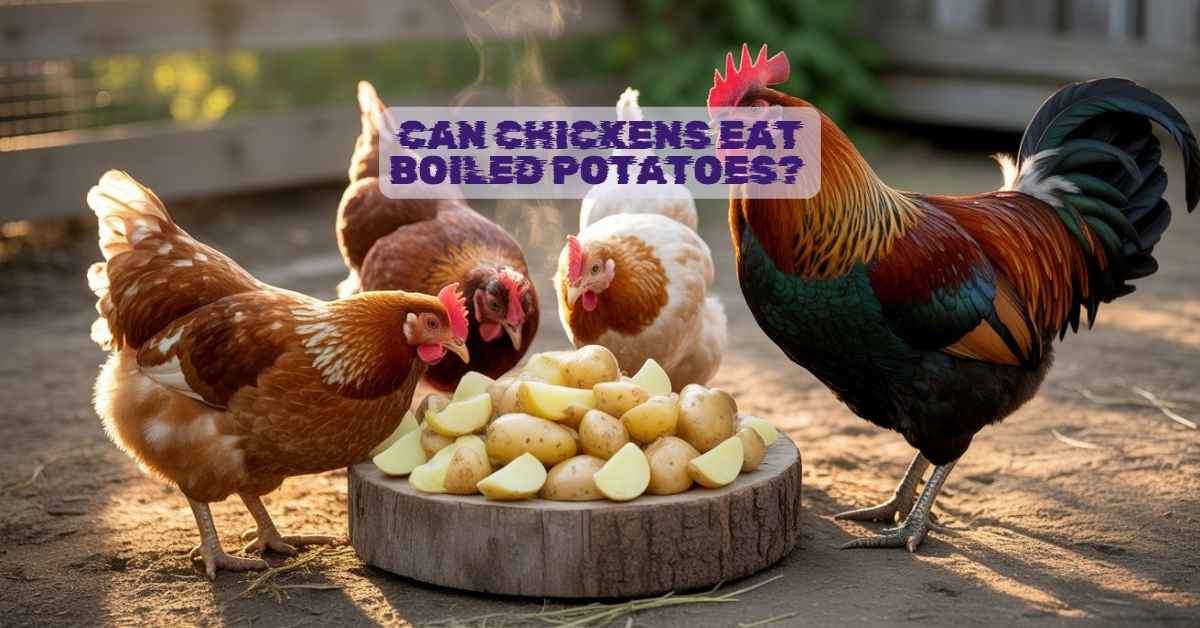
Can chickens eat boiled potatoes? Yes—chickens can eat boiled potatoes, but only when they are plain, fully cooked, and fed in moderation. While boiled potatoes can provide a quick energy boost, feeding them incorrectly—especially raw, green, or sprouted potatoes—can expose your flock to solanine toxicity, a harmful compound found in the nightshade family.
If you raise backyard chickens, understanding the difference between safe and unsafe potato feeding practices can protect your flock’s health and improve their diet.
Are Boiled Potatoes Safe for Chickens?
Boiled potatoes are generally safe for chickens when prepared properly. Cooking reduces certain harmful compounds found in raw potatoes, making them easier to digest and safer to consume.
However, not all potatoes are equal.
- Safe: Plain boiled potatoes (no salt, butter, or seasoning)
- Unsafe: Raw potatoes, green potatoes, or sprouted potatoes
Potatoes belong to the nightshade family (Solanaceae), which naturally contains glycoalkaloids like solanine and chaconine. These compounds can be toxic to chickens in higher concentrations.
Boiling helps reduce toxicity, but it does not eliminate it completely, which is why moderation matters.
Why Raw or Green Potatoes Are Dangerous for Chickens
The biggest risk comes from solanine toxicity, a natural defense chemical found in potatoes.
What makes potatoes toxic?
- Green potatoes contain elevated solanine levels
- Sprouts and eyes have concentrated toxins
- Raw potatoes are harder to digest and retain more toxins
Scientific observations suggest:
- Toxic threshold: ~20–25 mg per 100g of solanine
- Dangerous dose: 2–5 mg per kg body weight
Effects of solanine poisoning in chickens:
- Digestive distress
- Diarrhea
- Weakness or lethargy
- Neurological issues (loss of coordination)
This is why experienced poultry keepers avoid feeding anything from the potato plant except properly cooked tubers.
Nutritional Value of Boiled Potatoes for Chickens
Boiled potatoes are not harmful in small amounts, but they are not a complete food.
Nutritional profile (per 100g):
| Nutrient | Amount |
|---|---|
| Carbohydrates | ~17g |
| Protein | ~2g |
| Fiber | ~2.2g |
| Calories | ~77 kcal |
| Water content | ~77% |
What this means:
- High carbohydrates → quick energy
- Low protein → not ideal for growth
- Moderate fiber → supports digestion
👉 Chickens need a balanced poultry diet, so potatoes should only be an occasional treat, not a staple.
How Much Boiled Potato Can Chickens Eat?
This is where most articles fall short—but getting this right is critical.
Safe feeding guidelines:
| Factor | Recommendation |
|---|---|
| Portion size | 1–2 tablespoons per chicken |
| Frequency | 1–2 times per week |
| Diet ratio | Treats ≤ 10% of total diet |
| Main feed | 90% balanced poultry feed |
Age consideration:
- Avoid feeding potatoes to chicks under 6–8 weeks
- Adult chickens tolerate small portions better
👉 Overfeeding potatoes can lead to weight gain and nutritional imbalance.
How to Feed Boiled Potatoes to Chickens Safely
Proper preparation makes all the difference.
Step-by-step method:
- Wash potatoes thoroughly
- Remove any green parts or sprouts
- Boil at 100°C (212°F) for 15–20 minutes
- Do not add salt, butter, oil, or spices
- Mash or chop into small pieces
Serving tip:
Mix boiled potatoes with regular feed to maintain a balanced diet structure.
Boiled vs Raw vs Green Potatoes (Critical Comparison)
| Type of Potato | Safety Level | Risk Level | Recommendation |
|---|---|---|---|
| Boiled (plain) | Safe | Low | Feed in moderation |
| Raw potatoes | Unsafe | Medium | Avoid |
| Green potatoes | Toxic | High | Never feed |
| Sprouted potatoes | Toxic | High | Discard |
👉 This simple comparison helps prevent common feeding mistakes.
Can Chickens Eat Potato Peels or Mashed Potatoes?
This depends on preparation.
Potato peels:
- Safe only if not green
- Wash thoroughly before cooking
Mashed potatoes:
- Safe if plain
- Unsafe if mixed with:
- Salt
- Butter
- Milk
- Seasonings
Processed potatoes:
- Chips, fries, or seasoned leftovers → avoid completely
Risks of Feeding Potatoes to Chickens
Even cooked potatoes carry risks if misused.
Key risks:
- Overfeeding → obesity
- Nutritional imbalance → reduced egg quality
- Hidden toxins → from green or sprouted potatoes
- Digestive issues → if fed in large quantities
👉 Chickens thrive on variety, not single-food reliance.
Signs of Potato Toxicity in Chickens
This is a critical but often ignored topic.
Watch for:
- Lethargy
- Diarrhea
- Weakness
- Loss of coordination
- Reduced appetite
What to do:
- Remove the food immediately
- Provide fresh water
- Consult a poultry expert if symptoms persist
Early detection can prevent serious health issues.
Are Sweet Potatoes a Safer Alternative?
Yes—sweet potatoes are generally safer than white potatoes.
Why?
- Lower solanine risk
- Higher vitamin content
- Easier digestion
Comparison:
| Feature | White Potatoes | Sweet Potatoes |
|---|---|---|
| Toxic compounds | Higher risk | Lower risk |
| Nutritional value | Moderate | High |
| Safety margin | Lower | Higher |
👉 Many poultry experts recommend sweet potatoes as a better vegetable option.
Best Vegetable Alternatives for Chickens
Instead of relying on potatoes, consider these safer options:
- Carrots
- Pumpkin
- Spinach
- Peas
- Cabbage
These foods provide better nutrition and fewer risks, supporting overall flock health.
Common Mistakes When Feeding Potatoes to Chickens
Avoid these frequent errors:
- Feeding raw potatoes
- Using green or sprouted potatoes
- Adding salt or butter
- Overfeeding beyond the 10% treat rule
👉 These mistakes are the main cause of diet-related health issues in backyard chickens.
Seasonal Feeding Tips for Chickens
Adjust feeding based on the season.
Winter:
- Chickens need more energy-rich foods
- Small amounts of boiled potatoes can help
Summer:
- Focus on hydrating foods
- Reduce heavy carbohydrate treats
👉 Seasonal feeding improves egg production and overall health.
Can Baby Chicks Eat Boiled Potatoes?
No—boiled potatoes are not ideal for young chicks.
Why?
- Weak digestive systems
- Require high-protein starter feed
- Risk of imbalance
👉 Stick to commercial chick starter feed during early growth stages.
LEARN MORE: Can Chickens Eat Kiwi Skin?
Expert Tips for a Balanced Chicken Diet
A healthy chicken diet follows a simple structure:
- 90% complete poultry feed
- 10% treats (including boiled potatoes)
- Access to clean, fresh water
- Variety of vegetables and grains
Key principle:
“Treats should supplement—not replace—a balanced poultry diet.”
Scientific Insight: Solanine in Potatoes
Solanine is a natural plant toxin designed to protect potatoes from pests.
Key facts:
- Found in nightshade plants
- Concentrated in:
- Green skin
- Sprouts
- Resistant to mild cooking
👉 This is why proper selection and preparation are essential.
Can Chickens Self-Regulate Toxic Foods?
Interestingly, chickens have some natural instinct to avoid harmful foods—but it’s not reliable.
- They may eat toxic foods if hungry
- Curiosity often overrides caution
👉 Never rely on instinct—always control what you feed.
Organic vs Store-Bought Potatoes: Does It Matter?
There is minimal difference in terms of solanine levels, but:
- Organic potatoes may have fewer pesticides
- Storage conditions affect toxicity more than farming method
👉 Focus on freshness and proper preparation, not just source.
FAQs About Feeding Potatoes to Chickens
Can chickens eat boiled potatoes every day?
No. Limit to 1–2 times per week to maintain diet balance.
Are potato skins toxic to chickens?
Only if they are green or sprouted.
Can chickens eat leftover mashed potatoes?
Yes, but only if plain and unseasoned.
Do boiled potatoes cause weight gain in chickens?
Yes, if overfed due to high carbohydrate content.
What vegetables are toxic to chickens?
Avoid:
- Raw potatoes
- Green tomatoes
- Onion in excess
- Avocado
Final Verdict
Boiled potatoes can be a safe and useful treat for chickens, but only under the right conditions. The key is moderation, proper preparation, and awareness of risks.
When used correctly, they offer:
- A quick energy boost
- Dietary variety
- Easy feeding option
But when used incorrectly, they can lead to:
- Toxicity
- Digestive problems
- Long-term health issues
👉 Stick to the 10% treat rule, avoid toxic potato forms, and prioritize a balanced poultry diet to keep your flock healthy and productive.