
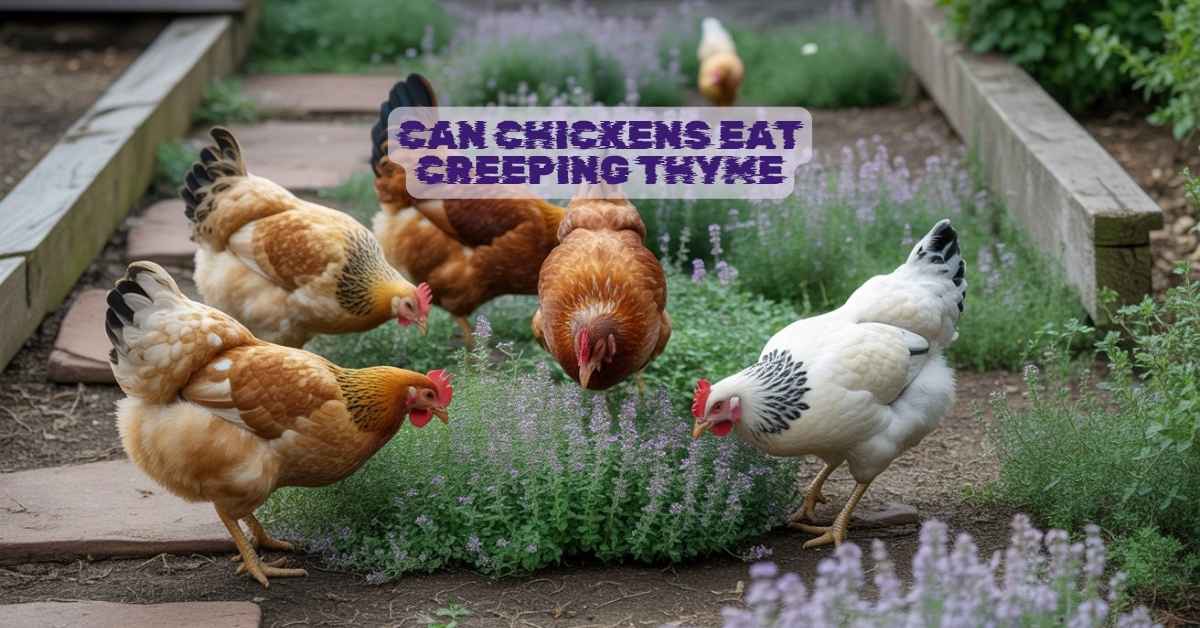
Can chickens eat creeping thyme? Yes—chickens can safely eat creeping thyme, and this aromatic herb is often considered a beneficial addition to a poultry diet when used in moderation.
It supports immune health, digestion, and respiratory function, but like all herbs, it should be offered as a supplement rather than a staple food.
If you’re exploring natural herbs for chickens or planning a chicken-friendly garden, this guide covers everything you need to know—benefits, feeding methods, quantities, risks, and practical uses in coops and runs.
What Is Creeping Thyme? (Plant Overview)
Thymus serpyllum is a low-growing, aromatic herb commonly used as a ground cover plant in gardens. It produces small leaves and delicate flowers, spreading across soil surfaces while releasing a pleasant herbal scent.
Key Characteristics
- Belongs to the mint family
- Thrives in sunny environments
- Commonly used in landscaping and herbal remedies
- Safe for backyard chickens and poultry environments
Because of its durability and safety, creeping thyme is often planted in chicken runs and coop areas.
Is Creeping Thyme Safe for Chickens?
Yes, creeping thyme is safe for chickens and widely regarded as a low-risk herb.
Why It’s Safe
- Contains natural antibacterial compounds
- Non-toxic when consumed in small amounts
- Supports overall poultry health
Unlike harmful plants, creeping thyme does not pose a toxicity risk, making it suitable for natural chicken feeding practices.
Nutritional & Medicinal Properties of Creeping Thyme
Creeping thyme is more than just a plant—it’s a functional herb packed with beneficial compounds.
Key Components
- Thymol (essential oil) – strong antibacterial properties
- Phytochemicals – support immune health
- Anti-inflammatory compounds – reduce irritation
These properties make thyme valuable in herbal poultry care systems.
Benefits of Creeping Thyme for Chickens
Adding creeping thyme to your flock’s environment can provide several health advantages.
Key Benefits
| Benefit | How It Helps Chickens |
|---|---|
| Immune support | Strengthens natural defenses |
| Respiratory health | Helps maintain clear airways |
| Antibacterial effect | Reduces harmful bacteria |
| Digestive support | Promotes gut health |
These benefits explain why thyme is often included in natural remedies for chickens.
How Chickens Use Creeping Thyme Naturally
Chickens interact with herbs in interesting ways.
Natural Behavior
- Pecking at leaves while foraging
- Exploring ground cover plants
- Using herbs for enrichment
Free-range chickens may consume creeping thyme naturally as part of their foraging behavior, contributing to a more balanced and varied diet.
Can Chickens Eat Fresh vs Dried Creeping Thyme?
Both forms are safe, but they differ in strength.
| Form | Benefits | Best Use |
|---|---|---|
| Fresh thyme | Mild, natural | Free-range grazing |
| Dried thyme | Concentrated | Mixed in feed |
👉 Fresh thyme is ideal for natural feeding, while dried thyme offers a more controlled dosage.
How to Feed Creeping Thyme to Chickens (Step-by-Step)
Proper feeding ensures maximum benefits without overuse.
Preparation
- Harvest clean, pesticide-free thyme
- Rinse if necessary
Feeding Methods
- Scatter fresh leaves in the coop
- Mix dried thyme into feed
- Offer as part of herb blends
Advanced Use
Some keepers prepare thyme-infused water to support respiratory health.
How Much Creeping Thyme Can Chickens Eat?
Moderation is key.
Recommended Amount
- 1–2 teaspoons dried thyme per week
- Small handful of fresh thyme occasionally
- Limit herbs to 5–10% of total diet
Why Limits Matter
Overfeeding herbs can:
- Affect digestion
- Reduce intake of balanced feed
👉 Always treat thyme as a supplemental herb.
How Often Can Chickens Eat Creeping Thyme?
Creeping thyme should not be fed daily.
Ideal Frequency
- 1–2 times per week
- Occasional herbal addition
This helps maintain a balanced poultry diet.
Risks and Precautions When Feeding Thyme
Although safe, improper use can lead to issues.
Possible Risks
- Overfeeding herbs
- Strong essential oil concentration
- Mild digestive sensitivity
👉 Always introduce new herbs gradually over 3–5 days.
Can Baby Chicks Eat Creeping Thyme?
Young chicks require special care.
Guidelines
- Avoid feeding before 4–6 weeks of age
- Introduce very small amounts later
- Monitor for any reaction
👉 Starter feed should remain the primary diet for chicks.
Can Creeping Thyme Be Used in Chicken Coops?
Yes, creeping thyme is excellent for coop use.
Benefits in Coops
- Helps reduce odors
- Acts as a natural pest deterrent
- Provides enrichment
Some keepers add thyme to nesting boxes for added benefits.
Is Creeping Thyme a Good Ground Cover for Chicken Runs?
This is one of the biggest advantages of creeping thyme.
Why It Works Well
- Durable and low-growing
- Safe for pecking
- Improves soil quality
👉 It’s one of the best ground cover plants for chickens.
Other Herbs Chickens Can Eat Safely
Creeping thyme is just one of many beneficial herbs.
Safe Herbs
- Oregano
- Mint
- Basil
- Lavender
These herbs contribute to a natural poultry health system.
Herbs Chickens Should Avoid
Not all herbs are safe.
Unsafe Plants
- Toxic ornamental herbs
- Plants with strong chemical compounds
Always verify before introducing new herbs.
Creeping Thyme vs Other Herbs for Chickens
| Herb | Benefit | Suitability |
|---|---|---|
| Creeping thyme | Antibacterial | Excellent |
| Oregano | Immune boost | Excellent |
| Mint | Cooling effect | Good |
👉 Creeping thyme stands out for its balanced benefits and safety.
Expert Tips for Using Herbs in Chicken Care
To get the best results:
- Rotate herbs regularly
- Introduce gradually over 3–5 days
- Monitor chicken behavior
- Maintain diet balance
These practices ensure optimal poultry health.
LEARN MORE: Can Chickens Eat Yellow Zucchini
Common Mistakes When Feeding Herbs to Chickens
Even beneficial herbs can be misused.
Common Errors
- Feeding too much at once
- Ignoring portion control
- Using contaminated plants
👉 Avoiding these mistakes ensures safe herbal feeding.
Case Study: Backyard Chicken Herb Use
A backyard chicken keeper introduced creeping thyme in a chicken run.
Approach
- Planted as ground cover
- Allowed natural foraging
Results
- Improved coop smell
- Healthier, more active chickens
- Reduced pest presence
👉 This shows how herbs can enhance both environment and health.
Expert Insight
“Herbs like creeping thyme are valuable additions to chicken care, but they work best when used in moderation and as part of a balanced system.”
This highlights the importance of controlled herbal supplementation.
FAQs About Chickens and Creeping Thyme
Can chickens eat creeping thyme every day?
No, it’s best fed 1–2 times per week.
Is thyme good for chickens?
Yes, it supports immune and respiratory health.
Can chickens eat dried thyme?
Yes, but in small controlled amounts.
How do you use thyme in a chicken coop?
Add it to nesting areas or scatter leaves.
Is creeping thyme safe for chicken runs?
Yes, it’s one of the best ground cover plants.
Conclusion
So, can chickens eat creeping thyme? The answer is yes—it’s a safe and beneficial herb when used properly. From improving immune health to enhancing the coop environment, creeping thyme offers multiple advantages for backyard flocks.
The key is simple:
- Feed in moderation
- Use as a supplement, not a staple
- Integrate it into a balanced diet and environment
By following these guidelines, you can safely use creeping thyme to support a healthier, happier flock.