
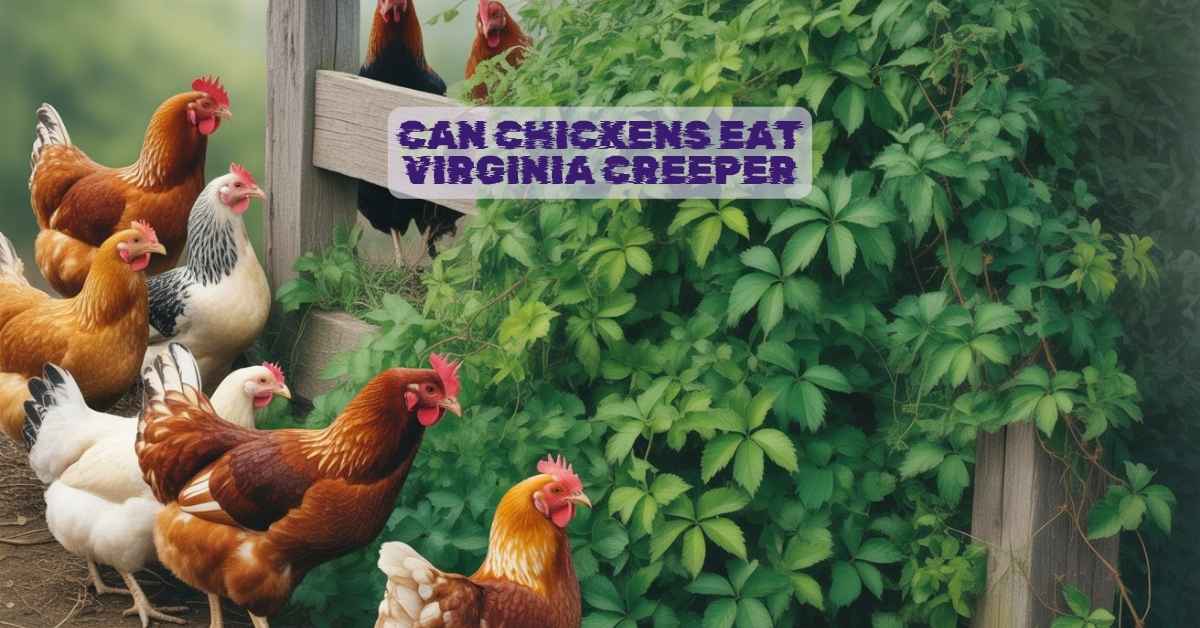
Can chickens eat Virginia creeper? The clear answer is no—Virginia creeper is not safe for chickens. This common garden vine contains oxalate crystals that can cause oral irritation, digestive distress, and other health issues, especially if chickens eat the berries.
While chickens may not actively seek it out, accidental ingestion is possible, making it important for backyard flock owners to understand the risks and take preventive steps.
This complete guide explains toxicity, symptoms, treatment, and safe alternatives so you can protect your flock and maintain a chicken-safe environment.
What Is Virginia Creeper? (Plant Overview)
Parthenocissus quinquefolia is a fast-growing ornamental vine commonly found in gardens, fences, and walls. It is popular for its five-leaflet structure and ability to cover large surfaces quickly.
Key Characteristics
- Produces small dark berries
- Thrives in various climates
- Often used for landscaping
While attractive, it is also listed among toxic plants for poultry, making it a concern for backyard chicken keepers.
Is Virginia Creeper Poisonous to Chickens?
Yes, Virginia creeper is considered poisonous to chickens due to the presence of calcium oxalate crystals.
How Toxicity Works
When ingested:
- Oxalate crystals cause irritation in the mouth and throat
- They can lead to gastrointestinal irritation
- In larger amounts, they may affect overall health
👉 This makes it unsafe as part of any poultry diet.
Which Parts of Virginia Creeper Are Toxic?
Every part of the plant carries some level of risk, but certain parts are more dangerous.
| Plant Part | Toxicity Level | Risk to Chickens |
|---|---|---|
| Berries | High | Most dangerous |
| Leaves | Moderate | Can irritate digestion |
| Stems | Low to moderate | Still unsafe |
👉 The berries are especially concerning, which leads to a common question.
Can Chickens Eat Virginia Creeper Berries?
Can chickens eat Virginia creeper berries? Absolutely not. The berries are the most toxic part of the plant.
Why Berries Are Dangerous
- Contain higher concentrations of oxalate crystals
- Can cause immediate irritation
- Even 1–2 berries may trigger symptoms
Chickens may be attracted to berries due to their appearance, increasing the risk of accidental poisoning.
What Happens If Chickens Eat Virginia Creeper?
When chickens ingest Virginia creeper, the body reacts quickly to the toxins.
Internal Effects
- Irritation of the digestive tract
- Disruption of normal digestion
- Reduced nutrient absorption
External Effects
- Changes in behavior
- Reduced appetite
- Signs of discomfort
Symptoms can appear within 1–3 hours, making early detection critical.
Symptoms of Virginia Creeper Poisoning in Chickens
Recognizing symptoms early is essential for protecting your flock.
Common Symptoms
- Drooling or mouth irritation
- Diarrhea
- Lethargy
- Weakness
- Swelling around the beak or throat
Severe Symptoms
- Dehydration
- Loss of coordination
👉 Always monitor chickens for 24–48 hours after exposure.
How Much Virginia Creeper Is Toxic to Chickens?
There is no safe amount of Virginia creeper for chickens.
Key Facts
- Even small quantities can cause irritation
- Toxicity is dose-dependent
- Younger or smaller chickens are more vulnerable
👉 Ingestion of even 1–2 berries can be harmful.
What to Do If Chickens Eat Virginia Creeper
Quick action can prevent serious health issues.
Immediate Steps
- Remove access to the plant immediately
- Provide fresh, clean water
- Isolate the affected chicken
Monitoring
- Observe for 24–48 hours
- Watch for worsening symptoms
When to Contact a Vet
- Severe symptoms appear
- No improvement within hours
👉 Early intervention increases recovery chances significantly.
Can Chickens Die from Eating Virginia Creeper?
In most cases, Virginia creeper causes mild to moderate toxicity, but severe cases can occur.
High-Risk Situations
- Consumption of berries
- Large amounts eaten
- Delayed treatment
👉 While death is rare, it is possible in extreme cases, especially without intervention.
Do Chickens Naturally Avoid Toxic Plants?
Many believe chickens instinctively avoid harmful plants, but this is not always reliable.
Reality Check
- Chickens are naturally curious feeders
- They may peck unfamiliar plants
- Risk increases in confined spaces
👉 This makes prevention more important than relying on instinct.
Is Virginia Creeper Safe Around Chicken Coops?
Virginia creeper is not safe near chicken areas, especially where birds roam freely.
Safety Guidelines
- Keep plants at least 10–15 feet away from the coop
- Avoid planting in accessible areas
- Remove vines near fencing
👉 A safe environment reduces the risk of accidental ingestion.
How to Prevent Chickens from Eating Virginia Creeper
Prevention is the most effective strategy.
Best Practices
- Ensure 100% removal of accessible vines
- Install fencing around garden areas
- Use raised beds for ornamental plants
- Inspect coop surroundings regularly
These steps help create a poultry-safe garden.
Safe Alternatives to Virginia Creeper for Chicken Areas
Instead of toxic vines, choose safe and beneficial plants.
Chicken-Friendly Options
- Herbs like mint and oregano
- Edible greens
- Non-toxic flowering plants
These options support healthy foraging behavior.
Toxic Plants Chickens Should Avoid
Virginia creeper is part of a broader group of harmful plants.
Common Toxic Plants
- Hemlock
- Foxglove
- Nightshade
- Virginia creeper
Knowing these plants helps prevent poultry poisoning incidents.
Safe Plants for Chickens (Garden-Friendly Options)
A safe garden improves both nutrition and well-being.
Recommended Plants
- Leafy greens
- Herbs
- Safe vegetables
These provide a natural source of nutrients and enrichment.
LEARN MORE: Can Chickens Eat Loquats
Virginia Creeper vs Other Toxic Plants (Comparison)
| Plant | Toxicity Level | Risk |
|---|---|---|
| Virginia creeper | Moderate | Irritation |
| Hemlock | Severe | Fatal |
| Nightshade | Moderate | Harmful |
👉 This comparison highlights why Virginia creeper should not be ignored.
Case Study: Backyard Chicken Exposure
A backyard flock encountered Virginia creeper growing along a fence.
Situation
- Chickens pecked at a few berries
Outcome
- Symptoms appeared within 2 hours
- Mild lethargy and drooling observed
- Chickens recovered after isolation and hydration
👉 This shows the importance of quick response and monitoring.
Expert Insight
“Backyard chickens don’t always recognize toxic plants. Prevention and observation are your strongest defenses.”
This reinforces the need for proactive flock management.
FAQs About Chickens and Virginia Creeper
Can chickens eat Virginia creeper berries safely?
No, berries are the most toxic part and should never be eaten.
Is Virginia creeper poisonous to poultry?
Yes, it contains oxalate crystals that cause irritation.
What happens if chickens eat toxic plants?
They may show digestive distress, weakness, and irritation.
How do I keep chickens away from garden plants?
Use fencing, remove toxic plants, and supervise free-range time.
Can chickens eat wild vines?
Not all vines are safe—always verify before allowing access.
Conclusion
So, can chickens eat Virginia creeper? The answer is a firm no. This plant poses a real risk to poultry health, especially due to its toxic berries and irritating compounds.
The safest approach is simple:
- Remove the plant from chicken areas
- Monitor your flock carefully
- Provide a safe, controlled environment
By taking these steps, you can ensure your chickens stay healthy, active, and protected from harmful plants.