
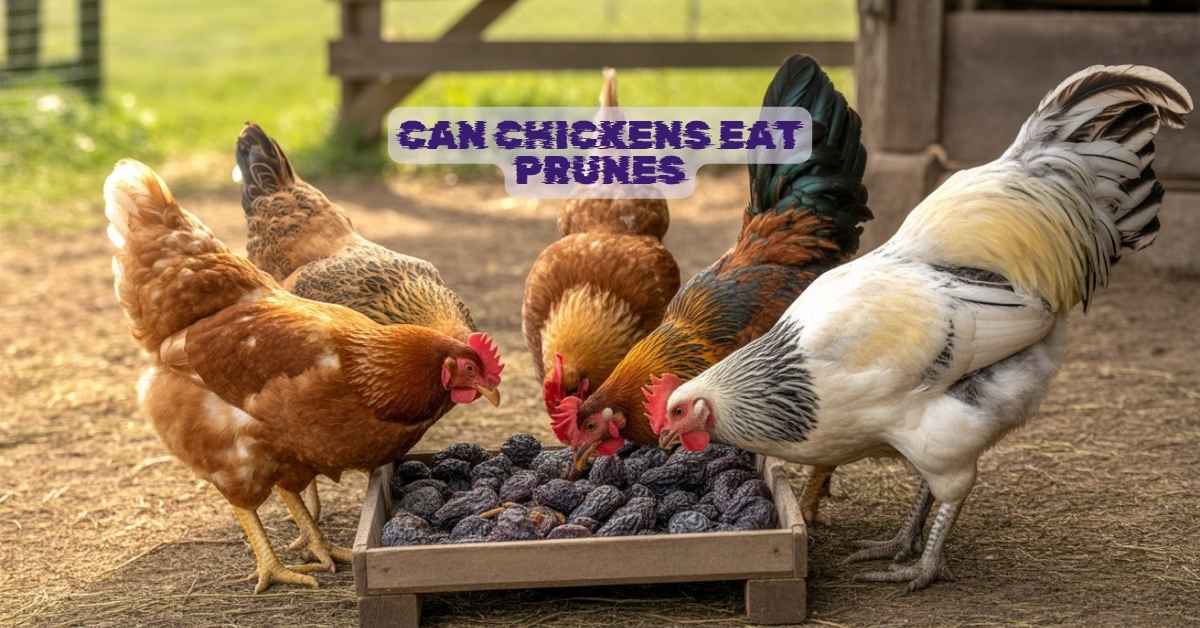
Can chickens eat prunes? Yes—chickens can eat prunes, but only in very small amounts. While prunes (dried plums) are not toxic, they are high in sugar and fiber, which means overfeeding can quickly lead to digestive issues like diarrhea. When used carefully, prunes can be an occasional treat, but they should never become a regular part of a chicken’s diet.
Can Chickens Eat Prunes Safely?
Prunes fall into a category of safe but caution-heavy foods. Unlike harmful items, they don’t contain toxins in the flesh, but their nutritional concentration makes them risky if overfed.
A balanced feeding structure is essential:
| Diet Component | Ratio |
|---|---|
| Complete Feed | 90% |
| Treats (including prunes) | ≤10% |
This means prunes should be treated as a rare supplement, not a staple.
“Just because chickens can eat something doesn’t mean they should eat it often.”
What Are Prunes?
Prunes vs Fresh Plums
Prunes are simply:
- Dried plums
- A concentrated version of fresh fruit
How Drying Changes Nutrition
Drying removes water and increases:
- Sugar concentration (2–3× higher)
- Fiber density
- Calorie content
Nutritional Comparison
| Feature | Fresh Plums | Prunes |
|---|---|---|
| Water Content | ~85% | ~30% |
| Sugar | Moderate | High |
| Fiber | Moderate | High |
| Calories | Low | High (~240 kcal/100g) |
Are Prunes Good or Bad for Chickens?
Prunes are neither entirely good nor entirely bad. Their value depends on how they are used.
Nutritional Benefits
In small amounts, prunes provide:
- Fiber for digestion
- Natural plant compounds
- Trace vitamins
High Sugar Content
Prunes contain:
- Around ~38g sugar per 100g
This makes them:
- One of the highest sugar treats for chickens
Fiber Effects
Fiber can:
- Support digestion in small doses
- Cause problems in excess
Do Prunes Cause Diarrhea in Chickens?
Yes—this is one of the most important factors to understand.
Sorbitol (Natural Laxative)
Prunes contain:
- Sorbitol, a natural sugar alcohol
It works by:
- Drawing water into the intestines
- Increasing bowel movement
Fiber and Gut Movement
High fiber:
- Speeds up digestion
- Can lead to loose droppings
Digestive Timeline
| Effect | Timeframe |
|---|---|
| Initial reaction | 6–24 hours |
| Observation period | 24–48 hours |
| Recovery (if overfed) | 1–3 days |
Risks of Feeding Prunes to Chickens
This is where most poultry owners make mistakes.
Overfeeding and Laxative Effects
Too many prunes can:
- Cause diarrhea
- Dehydrate chickens
High Sugar and Weight Gain
Excess sugar:
- Leads to weight issues
- Reduces overall health
Nutritional Imbalance
Prunes lack:
- Essential proteins
- Balanced nutrients
How Many Prunes Can Chickens Eat?
Portion control is critical.
Recommended Serving Size
- 1–2 small prune pieces per flock
Feeding Frequency
- 1–2 times per week (maximum)
- Preferably less
Treat Rule
Always follow:
- ≤10% of total diet
- Maintain 90% balanced feed
How to Feed Prunes to Chickens
Preparation
- Cut into small pieces
- Remove any hard parts
Feeding Method
You can:
- Mix with other foods
- Scatter in small amounts
Best Practice
Introduce prunes gradually and observe chickens for:
- 24–48 hours
Prunes vs Fresh Plums for Chickens
This comparison is essential for understanding safety.
Key Differences
| Feature | Fresh Plums | Prunes |
|---|---|---|
| Water Content | High | Low |
| Sugar Density | Moderate | High (2–3×) |
| Digestibility | Easy | Heavy |
| Feeding Frequency | 1–2x/week | Rare |
Which Is Safer?
- Fresh plums are safer and better tolerated
- Prunes should be limited strictly
Can Chickens Eat Dried Fruit Safely?
Prunes fall under dried fruit, which has unique risks.
Dried Fruit Concerns
Drying increases:
- Sugar levels
- Calorie density
Feeding Recommendation
Dried fruits should be:
- Rare treats
- Given in very small portions
Do Chickens Like Prunes?
Sweet Preference
Chickens naturally:
- Prefer sweet foods
- Are attracted to sugar
Overeating Risk
Because of this:
- Chickens may overconsume prunes if available
Foraging Behavior
In natural conditions:
- Chickens eat a variety of foods
- Not just high-sugar items
Can Baby Chicks Eat Prunes?
Age-Based Feeding Guide
| Age | Recommendation |
|---|---|
| 0–6 weeks | Avoid completely |
| 6–12 weeks | Very limited |
| Adults | Small controlled portions |
Why Chicks Should Avoid Prunes
Young chickens:
- Have sensitive digestive systems
- Need nutrient-rich feed
Common Mistakes When Feeding Prunes
Feeding Too Many
This is the most common mistake and leads to:
- Digestive problems
Ignoring Laxative Effects
Many owners don’t realize:
- Prunes act as a natural laxative
Replacing Proper Feed
Prunes should never:
- Replace balanced poultry feed
Lack of Portion Control
Even safe foods:
- Become harmful in excess
LEARN MORE: Can Chickens Eat Lemon Verbena
Expert Tips for Feeding Prunes Safely
Maintain Diet Balance
Always follow the 90/10 rule.
Introduce Slowly
New foods should:
- Be tested in small amounts
Monitor Health
Watch for:
- Loose droppings
- Behavioral changes
Use Variety
Rotate treats to:
- Avoid overexposure to sugar
Prune Feeding Chart
| Category | Amount | Frequency | Notes |
|---|---|---|---|
| Adult Chickens | 1–2 small pieces | 1–2x/week | Rare treat |
| Flock | Minimal | Occasional | Monitor digestion |
| Chicks | Avoid | Never | Sensitive digestion |
Prunes vs Commercial Feed
Nutritional Role
| Food Type | Role |
|---|---|
| Prunes | Treat |
| Poultry Feed | Complete nutrition |
Complete poultry feed should always remain the foundation of a chicken’s diet.
FAQs
Can chickens eat prunes safely?
Yes, but only in very small amounts.
Do prunes cause diarrhea in chickens?
Yes, if overfed due to fiber and sorbitol.
How many prunes can chickens eat?
Only 1–2 small pieces occasionally.
Are dried plums safe for chickens?
Yes, but they must be limited.
Can chickens eat dried fruit?
Yes, but rarely due to high sugar.
Final Verdict: Should You Feed Prunes to Chickens?
Prunes are a safe but limited treat for chickens. They provide:
- Small digestive benefits
- Natural fiber
However, they also carry risks:
- High sugar content
- Laxative effects
The best approach is simple:
- Feed prunes rarely
- Keep portions very small
- Maintain a balanced diet
When used correctly, prunes can be part of a healthy, varied feeding routine, but they should never replace the core nutrition your chickens rely on.